
Finding a Diamond Bar Street Directory
A useful street directory is a chain, not a single search box. Diamond Bar's incorporated boundary, postal lines, and county parcel lines do not always overlap. Begin with the full site address, including any unit or directional, and treat a result as a lead until the map and legal description agree. The city GIS viewer can show the selected lot and its neighbors. The County Assessor can add AIN, situs, legal, use, and value facts. The city permit archive can show who applied for work. None of those fields alone is a list of every person at the address.
- Standardize the address, then search it in the Diamond Bar Property Parcel Viewer and the County Assessor portal.
- Record the APN or AIN, parcel shape, legal description, zoning layer, and city-boundary result. A situs address is the physical location, not a tax mailing address.
- Browse the city permit archive by street name and house number. Note owner, applicant, contractor, permit type, work description, issue date, and final status as separate roles.
- Use the AIN, legal description, or known owner to prepare a grantor-grantee search at the RR/CC Norwalk index. The recorder has no public address search.
- For a historic occupant, test a reverse directory only after confirming the volume's community coverage. Then compare the name with census, newspapers, probate, or an obituary.
The address-to-owner-to-document path is the core of an address guide. It becomes more reliable when each handoff preserves the exact parcel key.
Diamond Bar Street Directory Parcel Fields
The city GIS hub links to a Property Parcel Viewer that searches by site address or APN. It supplies parcel boundaries, zoning, and displayed ownership information. Use the search box first, then zoom out far enough to see the full lot shape. Diamond Bar has hillside tracts, gated streets, cul-de-sacs, and long corridors where consecutive house numbers can mislead. A map click on the touching parcel is often a better neighbor method than guessing the next number.
| GIS control | Type | Required | Format or use |
|---|---|---|---|
| Address | Text or autocomplete | One search key | Full site address |
| APN | Text | One search key | Parcel number supplied by the Assessor |
| Layers List | Checkbox tree | No | Select Zoning and other offered layers |
| Parcel click | Map identify | No | Opens selected parcel attributes |
| Zoom and pan | Map tools | No | Browse adjacent lots or a whole street |
The official GIS Maps page is the source for this field set.
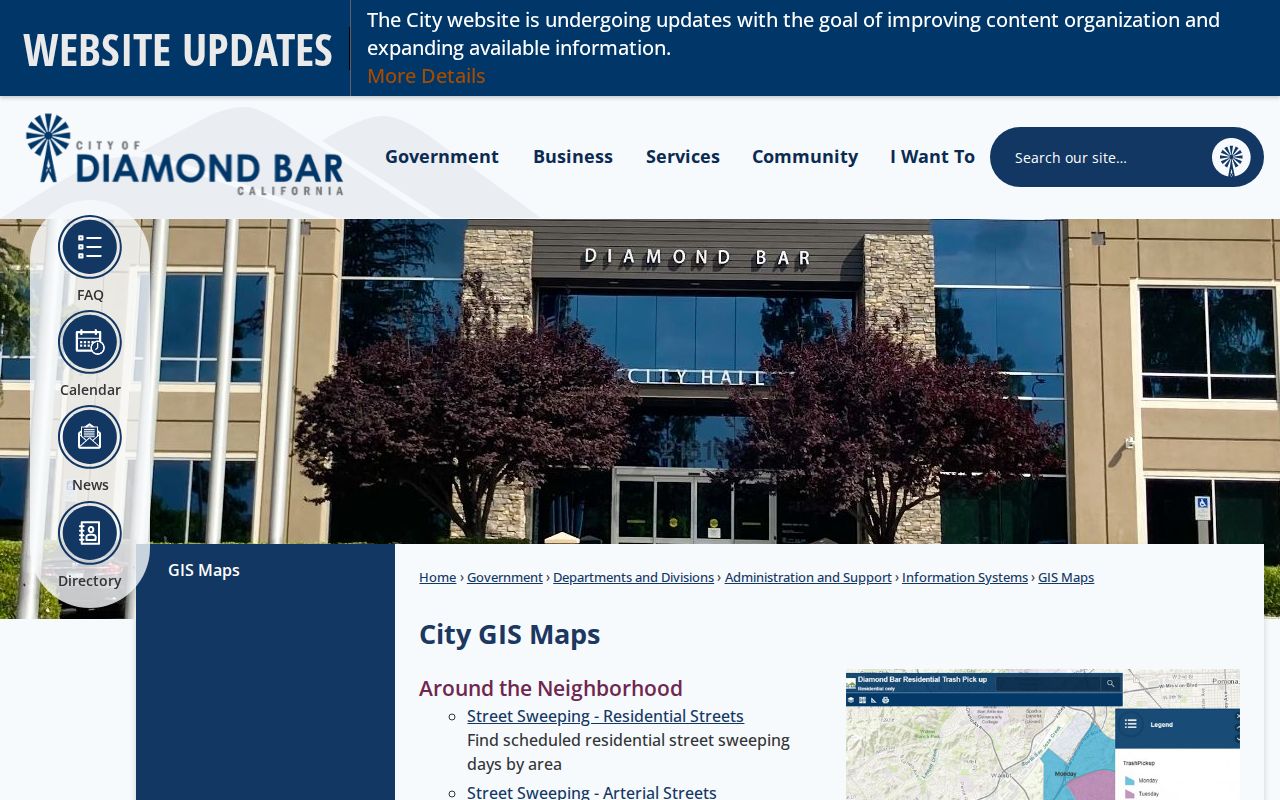
The viewer gives this address guide its spatial spine. It does not promise a complete occupant roster, a public radius export, or a measure tool.
- Parcel
- A mapped piece of land with its own assessment and legal identity.
- Situs address
- The physical address assigned to the parcel.
- APN or AIN
- A county or assessor identifier that helps match records across systems.
- Plat
- A recorded map of lots, streets, and boundaries used to read older land descriptions.
- Criss-cross directory
- A reverse directory that starts with a street and number, then lists a published occupant or business.
Diamond Bar Street Directory Permits
Diamond Bar's Online Records Library arranges building permits by street name and then address number. That structure makes it one of the best current street sources. A permit sheet can identify an owner, applicant, contractor, job address, permit number and type, valuation, work description, issue or final dates, and inspection status. A name on a permit shows a role in a project. It is not proof that the person lived at the site.
Building & Safety can help with copies at (909) 839-7020. Planning can help with zoning and property-line questions at (909) 839-7030 or planning@diamondbarca.gov. Appointments may be in person, by video, or by phone. If the public archive does not expose a needed code case or notice, make a targeted CPRA request with the address, APN, date range, and record category.
The city Planning Division guidance confirms the address and APN search path used beside permits.

The permit trail can date construction, remodeling, solar work, pools, and owner-builder activity. Keep contractors, applicants, and owners distinct when an address has many entries.
Diamond Bar Street Directory Records
The sources below can be lined up by address, but they do not carry the same kind of person evidence. A property roll describes the parcel. A permit records a project participant. A deed records title parties. A reverse directory lists a published occupant or business. The voter file is purpose restricted, and the self-verification form is private. Together they form an address record map, not a complete street-by-street roster.
| Address record | Keeper | What it can show | Access |
|---|---|---|---|
| Parcel and roll | City GIS and County Assessor | APN or AIN, boundaries, situs, legal, zoning, building facts | Free address or map search |
| Building permits | Diamond Bar Building & Safety | Applicant, owner, contractor, work and dates | Street and address browse; staff help |
| Deeds and liens | Los Angeles County RR/CC | Recorded parties, instrument, legal description | Norwalk name/year index; copies paid |
| Reverse directory | LAPL and library collections | Listed occupant or business in a publication year | Free OCR and page images; coverage varies |
| Voter information | Los Angeles County RR/CC | Self-status match or approved extract | Four-field self-check; restricted file request |
Use the parcel key to link the first three rows. Use publication year and exact street spelling to test the reverse directory. Use the Diamond Bar resident lookup when the goal shifts from a whole street to one person.
The voter row has a separate fallback. An approved file request goes through the County Election Information Section in Norwalk by the written voter-file application, with the requester, permitted purpose, jurisdictions, file choice, media, cost, and signature. Personal curiosity, solicitation, and harassment are not permitted uses.
Diamond Bar Street Directory Deed Bridge
Los Angeles County's recorder index cannot begin with a street address. The practical bridge is address to AIN or APN, then current owner or known acquisition document, then a grantor-grantee search by name and year. The index has records from 1851 forward, with 1851 through 1957 on the lower level and 1958 to the present on the second floor at Norwalk. Bring spelling variants and spouses. A legal description is the check against a same-name hit on another Diamond Bar street.
Once a document number is known, the RR/CC copy-order channel accepts online, mail, or in-person requests. The county says online orders may take 20 working days. A complete document is ordered, not a selected page. The real-estate records room is at 12400 Imperial Highway in Norwalk, and the main number is (800) 201-8999.
The copy-order page is the source for the known-document route.
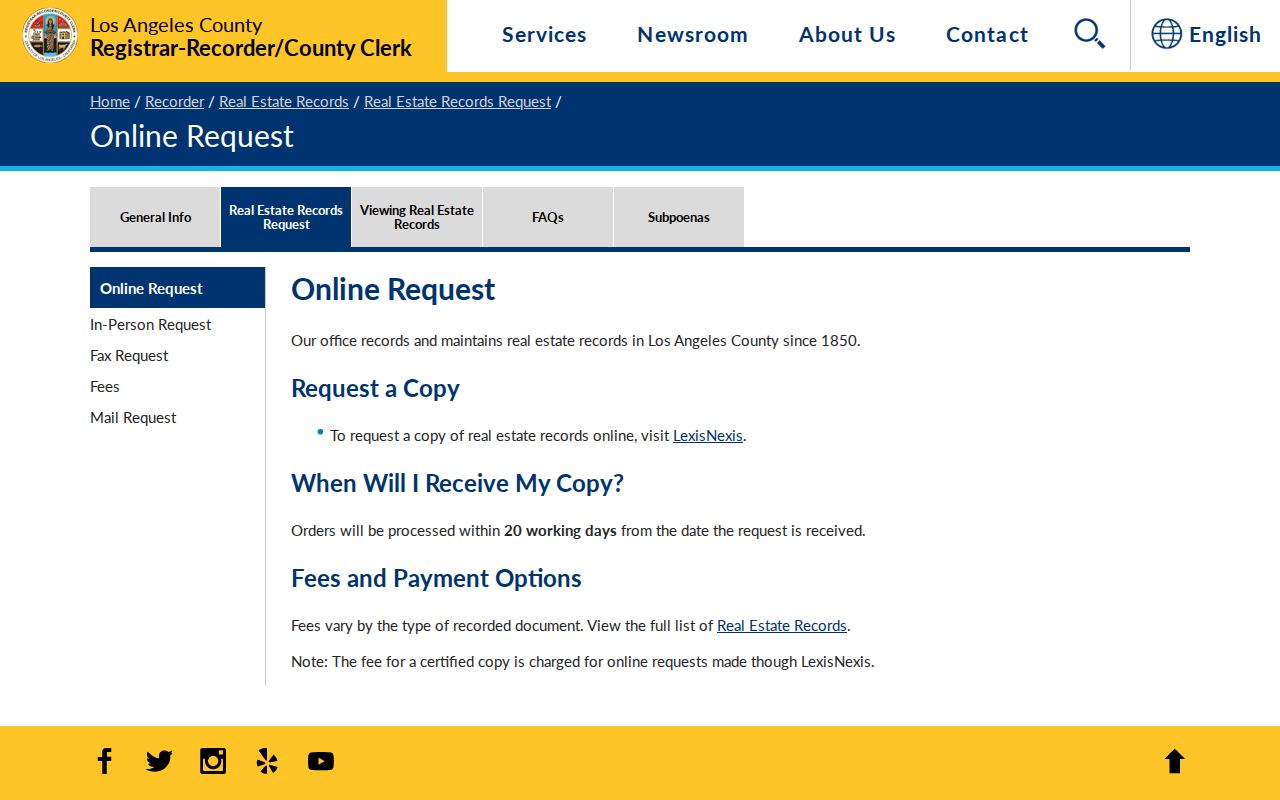
A deed can prove a recorded ownership transfer. It cannot prove that a renter, relative, guest, or every household member occupied the parcel.
Why Diamond Bar Deeds Need Name Search
The RR/CC index is alphabetical by party name and recording year, with grantor and grantee roles, document type, document number, date, and older book and page clues. There is no official internet address search and no telephone index search. The offline design is intentional: County Counsel warned that a web index could expose protected officials' home addresses under Government Code section 6254.21. That makes the Norwalk counter part of the address-record method, not an optional historical extra.
The county's real-estate records FAQ sets out the grantor, grantee, and year search logic.
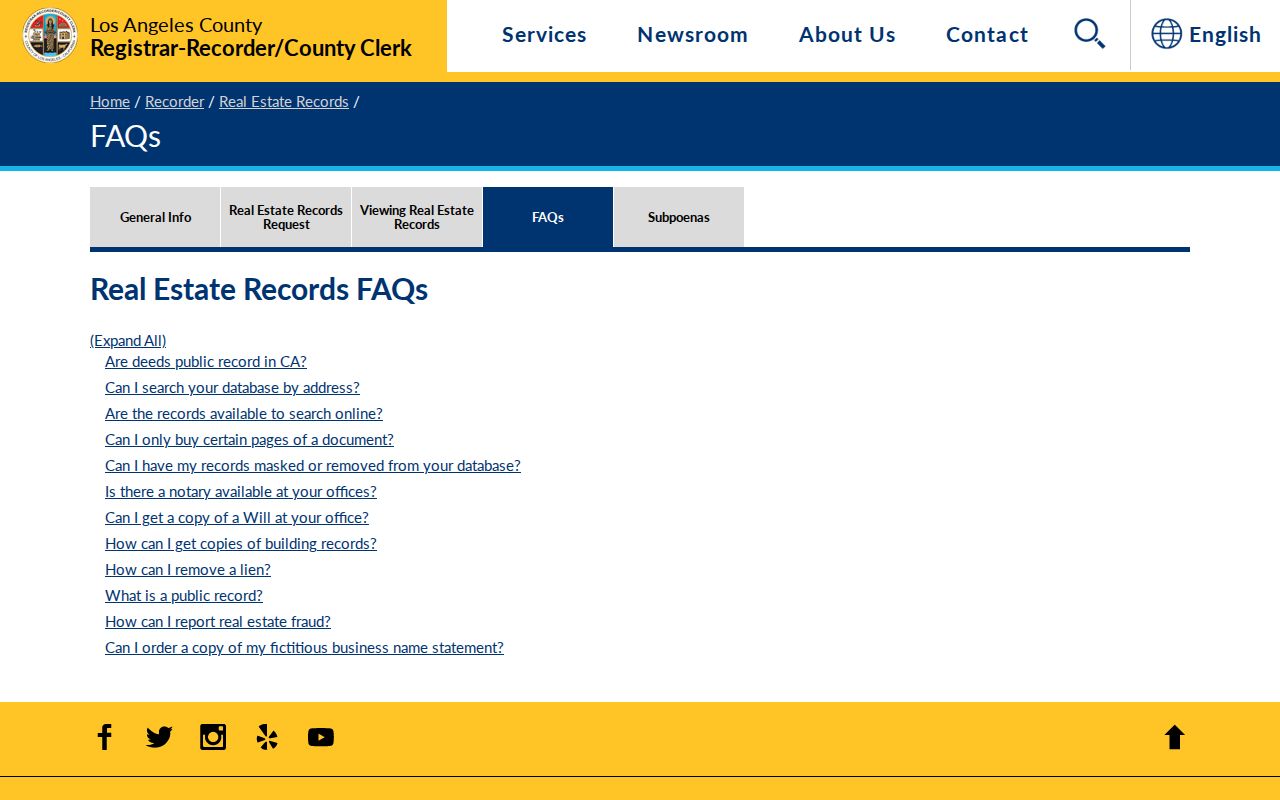
Search all plausible name forms, then match the legal description, APN, or document image before joining a party to the street.
Note: The recorder index is a finding aid, so a missing web hit does not mean a deed, lien, or release was never recorded.
Diamond Bar 91765 and 91789 Streets
Diamond Bar's primary ZIP is 91765, but roughly 3,000 residents and businesses historically used Walnut ZIP 91789 near the city's northern and western interface. In 2011, the city promoted a USPS survey aimed at consolidating addresses into 91765. That history can split a street search across city names, ZIP fields, newspapers, licenses, and older directories.
Verify delivery routing at the USPS ZIP Code Lookup. Verify city limits in GIS. Verify parcel identity with the Assessor. A standard “Diamond Bar” mailing line may sit outside the incorporated boundary, while an inside parcel may retain a Walnut postal label in an older source. Record both identities when searching by address.
The county recorder, in contrast, is not a ZIP-search tool. It needs a party name and year after the address has supplied a parcel and owner clue.
The county's homeowner notification program also illustrates why a known parcel matters: the official notification service follows recorded ownership, loan, default, and sale documents rather than a street mailing list.
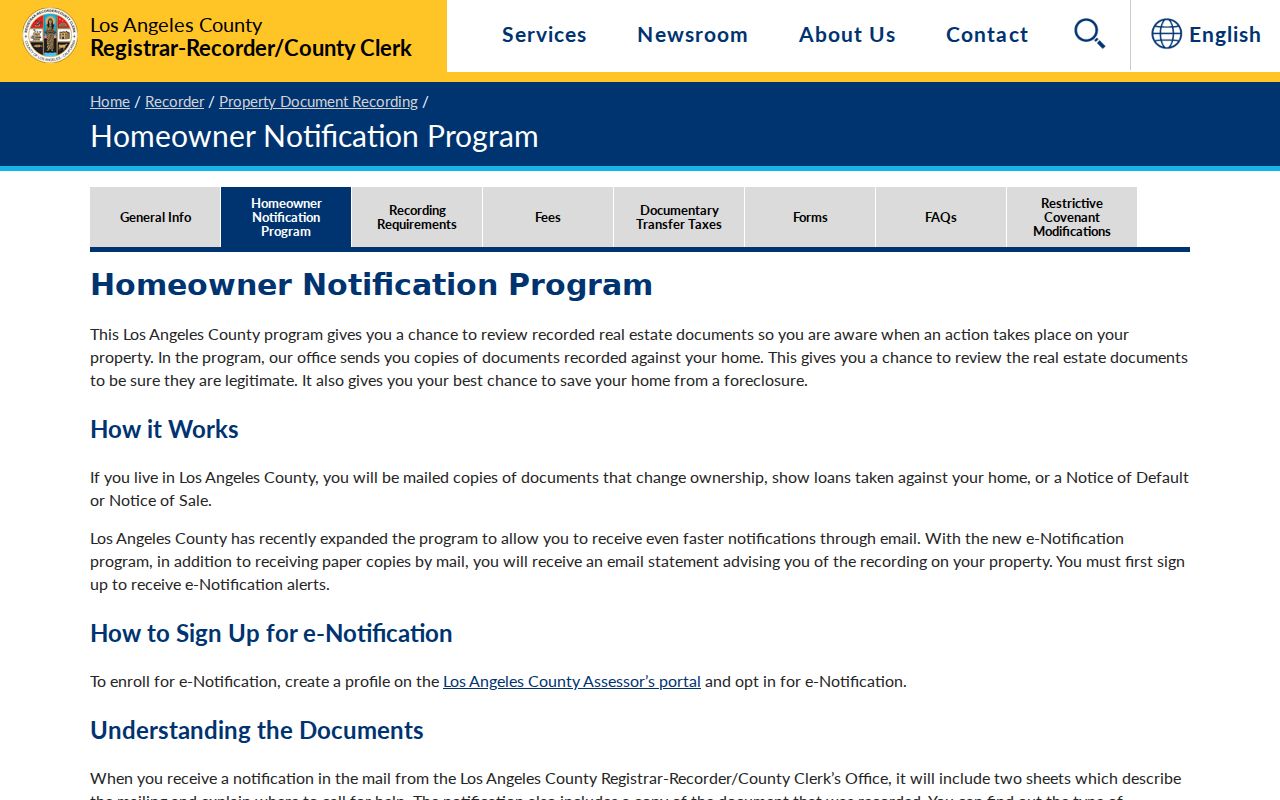
Use an official notice or parcel alert as a verification lead, not as evidence of every person at an address.
Diamond Bar Reverse Directories East
Reverse directories are the closest historical tool for a street-led search because they lead with a street heading and house number, then name an occupant or business. LAPL's ResCarta collection includes reverse volumes for 1906, 1927, and 1956 through 1987, but the broad Los Angeles-area label does not guarantee Diamond Bar coverage. Diamond Bar's first model homes came in 1960, so the later volumes overlap the development era while still requiring a community check.
Search street variants, house-number changes, and historic place names such as Walnut Valley, Pomona vicinity, and Spadra. Capture the volume title, publisher, front-matter coverage, page number, and the exact entry. A directory is a privately compiled snapshot. It may omit a person because of no response, a postal mismatch, no telephone listing, or a publication gap.
The full historical shelf belongs on the LAPL ResCarta browser and the Diamond Bar city directory page; this page uses it only to test a past occupant after current address evidence is stable.
Reading Diamond Bar Street Blocks
Diamond Bar has 132.3 street miles, steep ranch terrain, gated tracts, and cul-de-sacs. A street name can continue while parcels shift across a tract, HOA, school district, ZIP, or city edge. The map view therefore beats a simple sequence of house numbers. Click the target lot, write down its APN, then click every touching lot on both sides of the street and compare their situs and zoning facts.
City GIS and the County Assessor can confirm geometry. The permit archive can add construction activity. An address guide built from those layers should say “selected parcels” when the search is bounded, not imply that every household on the whole road has been identified. The same discipline helps on Diamond Bar Boulevard, Grand Avenue, Golden Springs Drive, Brea Canyon Road, and smaller hillside streets.
Note: Adjacent parcel geometry can cross service or postal lines even when two lots share one continuous street name.
What a Diamond Bar Street Directory Misses
Public address records do not enumerate every resident. A title owner may live elsewhere. A permit applicant may be a contractor. A reverse-directory occupant may have moved before publication. Renters, relatives, children, guests, utility customers, and protected people are not guaranteed to appear. DMV address data is restricted by the Driver's Privacy Protection Act, and utility or delivery customer lists are not public resident directories.
Lawful personal use. A Diamond Bar street directory is for family history, property research, civic review, and personal safety. Do not compile a household roster or use address records to stalk, harass, intimidate, threaten, or harm anyone.
The city records-request process can locate a specific public file when the library is incomplete, but CPRA does not require an agency to create a new list or disclose exempt material. Verify the source, date, and custodian before relying on a match.
The current copy and recording fees are published by RR/CC and can change.
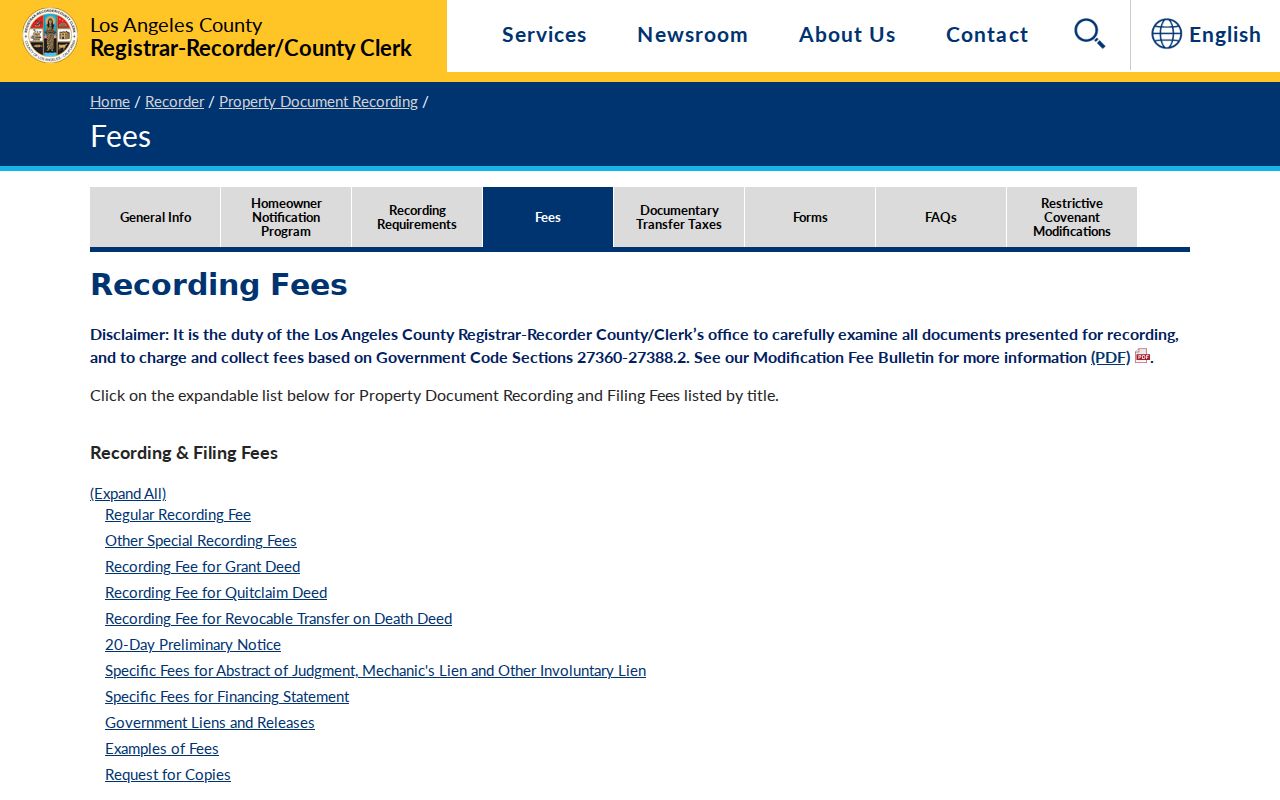
Fee pages explain access to a known document. They do not turn the recorder index into an online street browser.